 WORLD NEWS VIEW
NASA seeks commercial space station proposals: the ISS transition explained
NASA has set a December 8 proposal deadline for new commercial destinations. Here is the procurement timeline and the major technical questions.
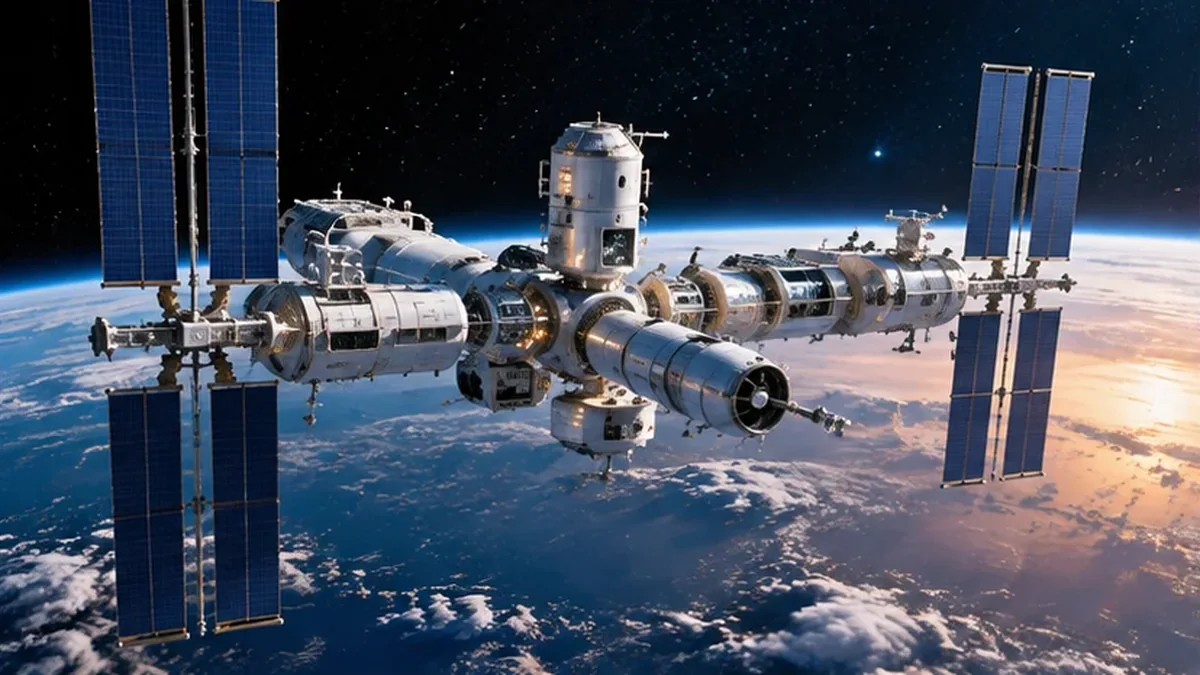
NASA released its final request for proposals on October 9, 2026, asking American industry for plans to design, develop, test, certify and operate commercial destinations in low Earth orbit. The agency says proposals are due December 8 and initial contract awards are expected in spring 2027. This is a significant step in preparing for a future beyond the International Space Station, but it is not an announcement that replacement space stations already exist or are certified for astronauts.
What NASA announced on October 9
The agency’s announcement is a final request for proposals, often abbreviated RFP, rather than a contract award. It invites companies to describe how they could provide commercial low-Earth-orbit destinations and associated human spaceflight services. A procurement document lays out what the buyer wants, how bids will be considered and the planned contractual structure. Whether the companies can actually deliver the proposed capabilities will need to be demonstrated in subsequent development work.
Headlines should say NASA is seeking plans, not that it has selected a winner or opened an operational replacement for the ISS.
Why NASA wants a commercial successor
The International Space Station has supported decades of research and human activity in orbit. NASA wants to preserve access to microgravity laboratories, crew training and technology demonstrations as the ISS approaches its planned end of service around 2030. The commercial model would make NASA a buyer of services rather than necessarily the owner of the entire outpost. The intended shift could also create room for universities, research firms and commercial clients if business demand materialises.
A sustainable transition requires more than a station’s existence: transportation, supplies, safety systems and a viable customer base must all work together.
The December 8 deadline and 2027 awards
NASA says companies must submit proposals by Tuesday, December 8, 2026, and expects awards in spring 2027. Those dates define procurement milestones, not spacecraft launch dates. After selection, participants still face engineering reviews, assembly, flight testing, verification and certification. The agency’s published description also anticipates stages in which it assesses further services. A proposed schedule is useful for accountability, but ambitious space projects can encounter delays.
Keep the distinction between the date for a bid, the date of an award, the date of first flight and the date a station is certified for crew.
How the contracting approach works
NASA outlines a multi-award, firm-fixed-price, indefinite-delivery/indefinite-quantity contracting framework. In simple terms, this can allow more than one company to participate early while leaving later work to competitive task orders under defined terms. A framework agreement is not identical to a blank cheque or guaranteed purchase of every service a company hopes to sell. Exact obligations depend on the solicitation and contracts.
The agency expects to select two or more firms in early development, followed by further competitive work for final evaluation and services.
What a space station must do safely
A crewed orbital destination needs dependable life support, power, thermal control, communication, attitude control, docking systems and emergency procedures. Reliability matters because a repair or evacuation can be much harder than on Earth. Long-duration living also depends on medical planning, radiation risk management and supply logistics. Commercial designs may use different architectures, but each must meet the applicable human-safety requirements before a public agency places astronauts aboard.
A successful uncrewed technology test should not be confused with certification for regular human habitation.
Microgravity research and practical science
Orbit offers a different environment for studying how fluids, materials, plants and human bodies behave with very low effective gravity. Research there can help answer scientific questions and test technologies, though the benefits of individual experiments must be demonstrated, not assumed. Continued access could matter to investigators who need repeated measurements over long periods. A new station’s research capacity would depend on laboratory facilities, crew time, vibration control and available power.
A claim about future medical breakthroughs should point to actual experiments or published evidence instead of promising a cure because a facility is in space.
Transport and orbital logistics
A destination in orbit is only useful if people, cargo and replacement parts can arrive reliably. Companies proposing stations must consider launch services, spacecraft compatibility, docking interfaces, emergency return options and the ongoing expense of supplies. NASA’s announcement refers to end-to-end destination and transportation services, making logistics an essential part of the procurement picture. An attractive station concept with no credible transport plan would leave major operational questions unanswered.
Track launch reliability and transport partnerships as closely as station module announcements.
The commercial business case
A station operator needs revenue sufficient to pay for design, launch, maintenance, crew services, insurance and upgrades. NASA’s demand could be important, but the agency has discussed an environment where other customers also pay for access. Demand from research organisations, manufacturing experiments or private missions may develop unevenly. Company forecasts should be read as forecasts, and the amount of signed customer business should be distinguished from non-binding expressions of interest.
Economic viability is not a side issue: a technically sound facility still needs a durable operating model and funding.
The risk of an access gap after ISS
If the ISS is retired before a commercial destination is ready to support astronauts, researchers could face a gap in regular access to a long-duration orbital laboratory. The severity would depend on the timing of certification, available transport and any alternative platforms. Agencies may adjust transition plans, but such changes should be confirmed through explicit announcements rather than inferred. Watching readiness milestones helps the public assess that risk without assuming failure in advance.
Follow test programmes, safety reviews and NASA’s public milestones to distinguish measurable progress from promotional renderings.
How a commercial station differs from the ISS
The International Space Station is the product of an international partnership built over decades. It has provided a platform for astronauts, experiments and operational learning, with participating space agencies dividing responsibilities according to their agreements. The emerging commercial-station approach changes the relationship between provider and customer. NASA wants to buy defined services in low Earth orbit rather than necessarily owning the entire destination.
That shift may create room for universities, pharmaceutical researchers, technology companies and other customers, but it also puts pressure on operators to demonstrate an economically sustainable market. Researchers will still need reliable crew transport, safe living conditions, power, communications and access to experimental facilities. None of those requirements disappears when the owner is private.
Contracts, certification and independent safety oversight therefore matter as much as attractive illustrations of future orbital laboratories. Readers should also distinguish the timeline of the current ISS from that of each prospective commercial station. A procurement award helps a programme advance but does not mean a new habitat has launched or started accepting scientists. Comparing operational capabilities is more useful than treating the two models as directly interchangeable.
What makes a crewed orbital laboratory hard to build
A space station must solve multiple engineering problems continuously rather than passing a single spectacular launch test. Life-support equipment needs to manage breathable air, humidity, water and waste under conditions that cannot be quickly fixed by sending a technician from Earth. Power systems must work through orbital day-and-night cycles, while communications and navigation require redundancy.
Structural design has to address radiation, micrometeoroids, docking forces and the long-term reliability of seals and pressure systems. Crews need emergency procedures and a reliable way to return home if a critical system fails. Research facilities must also provide repeatable conditions so that experiments produce useful measurements. Operators face logistical questions about supplies, replacement components, launch availability and ground support teams.
Certification evaluates evidence that such capabilities work together, not just that individual pieces looked promising in a factory demonstration. The technical standards and purchasing rules will affect costs and schedules. This is why the period between NASA's proposal solicitation, contract awards, qualification and actual crewed operations can span substantial time and why responsible reporting avoids promising an immediate replacement for the ISS.
What would count as genuine progress
Space-industry announcements frequently describe partnerships, investment commitments, completed design reviews and intended launch dates. They are important milestones, yet they do not all carry the same evidentiary weight. A design review shows that engineers and programme managers have evaluated plans at a defined stage; it does not prove the station is complete.
Manufacturing a pressure module, testing environmental controls, launching a demonstration article, docking spacecraft and sustaining crew operations are separate achievements. For the NASA commercial-destinations programme, WNV should record which contract phase a company has reached and whether milestones were accepted by the relevant agency. Claims about funding also need care: private financing commitments, government contract ceilings and money actually paid are different figures.
A credible timeline includes both technical and financial risks and notes changes rather than hiding delays. Readers should follow NASA documents and the operators' independently checkable results, not assume every computer-generated orbital image represents hardware already in service. Such discipline makes an exciting space story more informative because it shows exactly what scientists and engineers still need to accomplish.
Questions to ask whenever an orbital station is announced
Before judging a private station proposal, consider who will operate it, how crews will reach and leave it, what experiments it supports and which safety authority will certify its systems. A proposed launch window is less meaningful without credible evidence of hardware integration and successful testing. Commercial projections also need scrutiny: a station cannot survive financially on inspirational renderings alone, and potential customers are not automatically signed contracts.
NASA's solicitation offers a framework for evaluating proposals, not evidence that every applicant will succeed. Scientific claims require similar care. Microgravity can create useful conditions for research, but the value of an experiment depends on its design and results, not simply on being conducted in orbit. Follow-up reporting should be honest about progress, delays and uncertainty. This gives space enthusiasts a realistic picture without diminishing the genuine excitement of human activity in low Earth orbit.
Frequently asked questions
Has NASA opened a new replacement station?
No. On October 9 NASA announced a request for proposals, not an operational replacement station.
What is the bid deadline?
NASA says proposals are due December 8, 2026. Initial awards are expected in spring 2027.
Does winning a contract mean crew safety certification?
No. Design, testing, verification and safety certification are separate phases before astronauts can use a destination.
Why not keep using the ISS forever?
Long-running infrastructure faces ageing components, operational expense and programme decisions. NASA plans a transition rather than indefinite use.
Can companies sell station access to others?
The intended commercial model allows that possibility, but actual demand and terms will depend on each operator and its contracts.
Sources and verification
This WNV explainer draws on the linked reporting and primary information; it does not claim firsthand interviews or event photography. Where accounts are disputed or data are provisional, readers should review the original documents and subsequent updates.