 WORLD NEWS VIEW
NASA outlines SpaceX CRS-35 research: brain models, plant health and bacteria experiments
NASA’s October 12 research preview details upcoming ISS experiments using miniature brain models, plant-disease studies and antibiotic-resistance research.
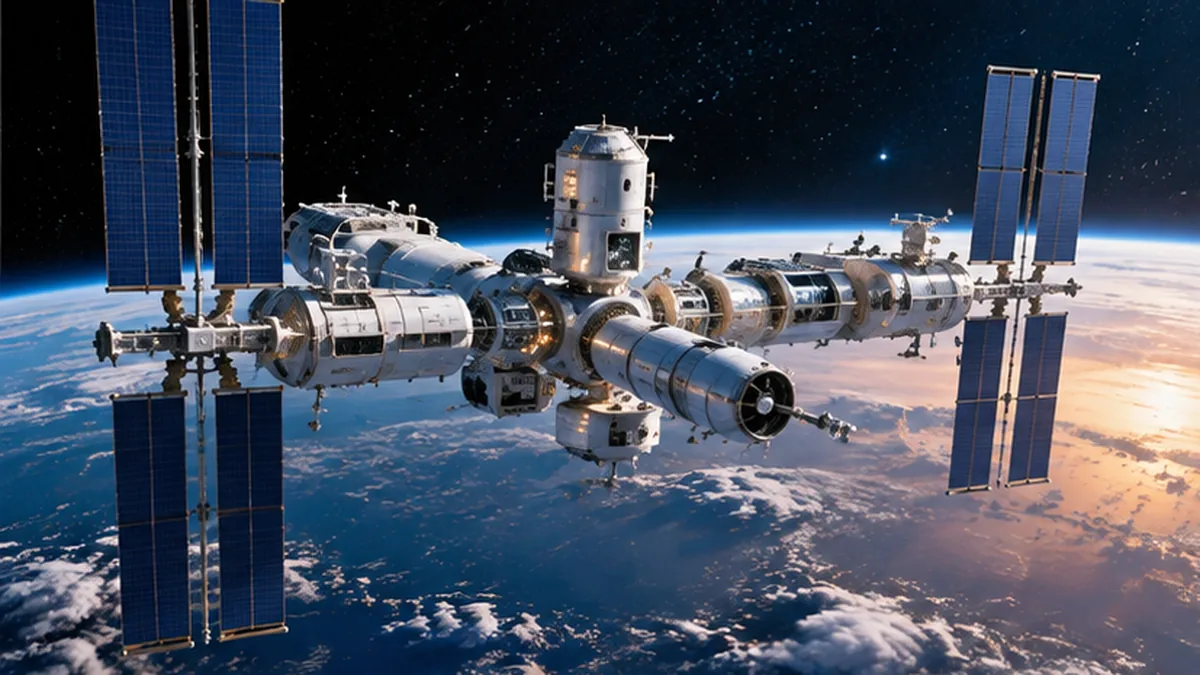
NASA published a fresh scientific preview on October 12 of the experiments it plans to send to the International Space Station on SpaceX's CRS-35 resupply mission. The planned research includes small laboratory-grown models of brain tissue, investigations of plant health and studies involving antibiotic-resistant organisms. The agency's mission page lists launch as no earlier than October 13, with timing subject to change. These are planned investigations, not completed discoveries or an already launched mission. Their importance lies in the questions researchers can test in the station's unusual environment and the possible, still unproven, applications for human health and life on Earth.
What NASA announced on October 12
NASA Science described four investigations from its Biological and Physical Sciences programme that are intended to travel to the orbiting laboratory. The topics include human-brain models, crop disease, methods of assessing astronaut health and research into antibiotic-resistant bacteria. Such experiments address issues that become more important as people spend longer periods away from Earth: how tissues function, how food crops behave, how health can be monitored and how microbes respond to changed conditions. The experiments also relate to scientific questions relevant to medicine and agriculture on the ground.
The word 'planned' matters throughout this report. An experiment selected for flight has not automatically produced findings. The launch might be delayed, samples may require specialised handling and scientists usually need time to collect and analyse results after an investigation. Research news should distinguish the announcement of an experiment, its execution and the publication of a peer-reviewed result. Treating a research preview as proof of a cure would misrepresent what NASA has actually stated.
What CRS-35 is and why the mission matters
CRS stands for Commercial Resupply Services. SpaceX conducts cargo missions for NASA to deliver scientific supplies, equipment and other materials to the International Space Station. The number 35 identifies this planned mission in the company's resupply series; it is not the name of a new space station or a crewed mission. Cargo flights provide the physical means of keeping the station supplied and allow scientists to conduct experiments in an orbital environment that cannot be fully reproduced on Earth.
NASA's mission information listed the launch for no earlier than October 13, 2026, from Florida, subject to operational confirmation. 'No earlier than' is a planning threshold rather than a guaranteed launch time. Weather, spacecraft readiness, range conditions and other constraints can require a schedule change. Readers should consult the live mission page for the latest status before relying on a fixed hour or assuming the spacecraft has already departed.
Why researchers use models of the human brain
The preview discusses small laboratory-grown brain models, sometimes called organoid-like or tissue models depending on the specific design. Such models contain cells arranged to represent limited features of human tissue. They are not a complete human brain and should not be described as conscious brains sent into space. They allow researchers to investigate particular biological processes under controlled conditions. In this case, the space environment offers another variable for studying how cells respond.
Scientists may want to understand whether certain cellular changes become more noticeable under microgravity or whether the environment offers insight into stresses affecting astronauts. A laboratory model can be useful for hypotheses, but it has clear limits: it does not reproduce all organs, blood circulation, immune responses or human behaviour. Results must be interpreted with those limitations in mind. An interesting change in cells is a starting point for further research, not immediate proof of a treatment for a neurological disease.
The science of microgravity
The International Space Station travels around Earth in a state commonly described as microgravity. Astronauts and experiments experience sustained free fall, creating conditions different from ordinary experiments on the ground. Researchers use that environment to study how fluids, materials, cells and organisms behave when the usual influence of gravity is greatly reduced. Some effects may reveal interactions that are difficult to separate in terrestrial laboratories.
Microgravity does not make every experimental result more useful than a ground-based test. Space research is costly, samples are limited and there are additional variables such as radiation and hardware constraints. Careful scientific design includes suitable controls, documentation and repeated measurements. Researchers need to determine whether an observed difference is truly connected to the conditions being studied. A single intriguing result should lead to more investigation, not a dramatic claim that gravity was the cause of every change.
Why plant health matters in orbit
Plants are important for food production on Earth and could become increasingly relevant to extended human spaceflight. Researchers studying crop disease can investigate how plants, microbes and environmental stresses interact. In space, water delivery, air circulation, lighting and other growing conditions require careful management. A change in a plant's response might be influenced by the space environment, the experimental hardware or the way samples were prepared. Untangling those factors is part of the scientific challenge.
The potential Earth connection is significant but should be described cautiously. Knowledge about disease resistance or plant stress could eventually inform agricultural research, yet a mission preview does not establish that any new crop treatment will work in a farmer's field. Different environments and crop varieties introduce different conditions. Responsible coverage should explain what researchers plan to measure, what controls are used and when independent results may become available.
Antibiotic-resistant bacteria and public health
Antibiotic resistance occurs when microorganisms change in ways that reduce the effectiveness of medicines used against them. It is a serious global health challenge because infections can become harder to treat. Researchers are interested in how microbes respond to environmental pressures, including those aboard an orbital laboratory. A space-based investigation may help identify biological processes worth examining in further controlled studies. It does not mean that astronauts have discovered a dangerous new superbug or that an outbreak is occurring on the station.
The public-health implications of such work depend on reproducible findings. Bacteria behave differently depending on the strain, conditions, available nutrients and many other factors. Spaceflight can introduce stresses not experienced during a typical hospital infection. Translating an observation into better medical practice requires multiple stages, including confirmation and testing in realistic settings. Sensational headlines about 'deadly space bacteria' obscure those careful steps and may needlessly alarm readers.
Assessing astronaut health more quickly
Long-duration missions create practical health-monitoring challenges. Astronauts may be far from specialist facilities, and returning a sample to Earth for analysis may not always be straightforward. Research into faster or more efficient ways to assess health could support decisions during future missions. The important questions concern accuracy, reliability, ease of use and the range of conditions such methods can detect. A faster test is not automatically better if it creates too many false alarms or misses important findings.
Developing effective tools for constrained environments can also inspire research for remote communities or emergency settings on Earth. That connection remains a potential application rather than an established benefit from this particular flight. A method must be validated in the populations and circumstances where it will be used. A device working well in a small orbital study may require redesign before it can be adopted in a clinic.
How the experiments are prepared
Sending science into orbit requires careful planning. Samples, containers, sensors and equipment must survive launch conditions and work within the station's safety and power limits. Researchers coordinate the experiment schedule with cargo loading, crew time and the availability of suitable facilities. Ground-based control experiments are often essential for interpreting what happens in flight. Scientists may also need to track temperature, storage, sample age and other handling details that influence results.
This logistical work rarely appears in a headline, but it is part of the research's value. If a sample is not handled consistently, researchers may struggle to know whether a change came from microgravity or from a preparation difference. Similarly, a result observed on a single flight may need repetition. Methodology, measurement quality and transparent reporting determine whether a study provides durable knowledge rather than an interesting but inconclusive observation.
Why this research matters for future exploration
NASA and its partners are considering how to support astronauts during increasingly ambitious missions. Longer stays in space raise questions about nutrition, health, medicines and access to reliable monitoring. The ISS offers a valuable place to study some of those issues while researchers still have regular communication and cargo opportunities. It can also help train scientists and engineers to design experiments for more distant environments, where technical constraints may be even greater.
However, it would be inaccurate to claim that the CRS-35 experiments guarantee safe multi-year missions to Mars. Human exploration depends on many independent systems, including life support, radiation protection, propulsion, medical care and mission planning. Biological research is one contribution among many. Its usefulness should be assessed when actual data emerge rather than inferred from the ambitious goals of the overall space programme.
How space research connects with Earth
Some of the most useful questions arise from comparing space and Earth environments. Researchers may study whether observed cellular changes point to mechanisms also relevant on the ground. Agricultural scientists can compare plant stress responses in controlled settings. Medical teams can evaluate the design of health-monitoring methods that operate with limited resources. These links help explain why publicly funded space research can interest people who will never travel beyond Earth.
Not every investigation will produce an immediate consumer product. Basic science can answer questions without leading directly to a marketable invention. Negative or inconclusive results may still teach researchers which approaches do not work. A meaningful assessment should value rigorous evidence and transparent publication, not only discoveries that make for dramatic headlines. Patience and replication are essential features of responsible scientific progress.
What the public should not assume
A launch announcement does not mean the spacecraft is already on the station. A brain-tissue model does not imply a whole brain has been created. Studying resistance in microbes does not announce an epidemic, and a plant-disease experiment is not proof of a new agricultural cure. These distinctions may sound basic, but viral social-media summaries often remove the conditional language that scientists use. Readers deserve wording that reflects what is planned, what is observed and what remains unknown.
Images also require care. A photograph of an older cargo launch may illustrate an article without showing the upcoming mission. An AI rendering of a space station is not documentary evidence from the flight. World News View uses a clearly labelled conceptual illustration here rather than pretending that it is a mission photograph. Anyone seeking real media should follow NASA's published image-use conditions and verify captions, dates and credits before republishing.
What evidence would make the story stronger
After the mission begins, a useful update may confirm liftoff time, spacecraft arrival or successful delivery of particular experiments. Later reporting can examine the experiment's progress and what measurements researchers have collected. Eventually, papers, datasets or presentations may provide findings that other scientists can scrutinise. These stages are distinct. Announcing cargo contents is a different news event from completing a study or demonstrating a medical application.
A rigorous follow-up will link to the original experiment description, identify the investigators and explain the study's design and limitations. It should discuss sample size and comparisons where those details are available. Claims of a breakthrough require especially strong evidence, ideally independent confirmation. Readers can enjoy the possibilities of space research without surrendering the standards they would expect of Earth-based medical or agricultural science.
What to watch on the CRS-35 mission
The next near-term question is the actual launch status and updated timing on NASA's mission page. After that come delivery milestones and science operations on the station. Readers should also look for which investigations were successfully activated and when results are expected. None of these future steps should be written as completed before NASA or the relevant researchers confirm them. The currently announced window is a plan, not a guarantee.
World News View's October 11 science article explained a separate NASA initiative involving commercial space-station proposals. That article remains intact. Today's October 12 story concerns research cargo and the questions it is designed to address. When the mission reaches a significant new milestone, a new dated report can record it with its own sources. Preserving that sequence is part of clear scientific journalism.
Frequently asked questions
Has CRS-35 already launched?
NASA’s mission page lists the planned launch as no earlier than October 13, 2026; check the live mission page for changes.
Are brain models actual human brains?
No. They are small laboratory-grown cellular models used to study certain biological processes, not conscious human brains.
Why research antibiotic resistance on the ISS?
Microgravity offers a distinct environment for studying microbial behavior and scientific questions that can inform Earth research.
Does one experiment prove a new treatment?
No. Laboratory investigations generate evidence and hypotheses, which require additional validation.
Sources and verification
NASA Science — October 12 CRS-35 research
NASA — SpaceX CRS-35 mission details
Reported as of 12 October 2026. This is a dated report; later developments are covered in separate articles.
Read the other language edition: हिंदी संस्करण