 WORLD NEWS VIEW
Shubman Gill and Shafali Verma win ICC September 2026 Player of the Month awards
The ICC honoured both Indian players on October 13. Here are Gill’s landmark ODI innings, Verma’s tournament achievements and why the awards matter.
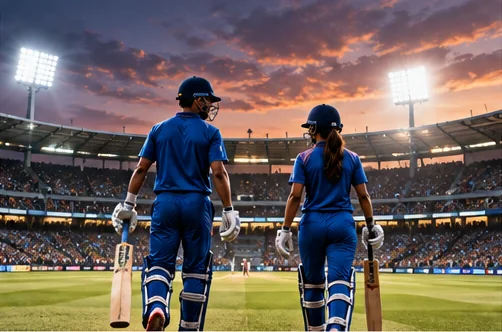
Published 14 October 2026 (IST). Underlying source updates: 13 October 2026.
India's cricket received a double individual recognition on October 13, 2026. The International Cricket Council named Shubman Gill its Men's Player of the Month and Shafali Verma its Women's Player of the Month for September. The ICC said Gill collected the honour for a record fifth time while Verma earned her second. The awards recognise performances during a defined month; they are not a new match result or a prediction that either player will perform the same way in the next series. The significance lies in the particular innings, tournaments and comparisons the governing body used in reaching its decisions—and in the attention the twin awards bring to Indian women's and men's cricket.
What the ICC announced on October 13
The ICC's published media release confirmed that an Indian player won each of its September 2026 monthly awards. Gill prevailed in the men's category, where Abhishek Sharma and Zimbabwe captain Sikandar Raza were among the other nominees. Verma won the women's category ahead of a shortlist that included Sri Lanka's Chamari Athapaththu and India's Sree Charani. Readers should be precise about the period: the announcement date was October 13, but the performances evaluated came in September. A player-of-the-month award is a judgement across several contributions, not the result of one specially scheduled final. The ICC also noted that this was the fifth time players from the same board had taken both awards, including a third such occurrence for India.
Gill's extraordinary West Indies ODI numbers
According to the ICC, Gill struck 333 runs in India's first two one-day internationals against West Indies in September. He made 110 from 108 balls in the opener at Thiruvananthapuram on September 27 as India chased down a target of 296, winning by eight wickets. In Guwahati three days later, he produced an unbeaten 223 from 133 deliveries after West Indies had scored 405 for seven. India reached 406 for two with 39 balls remaining. Those figures help explain why the ICC highlighted his month, but they also require context: a double century is exceptional in any successful ODI pursuit, and an unbeaten innings while captaining a high-pressure chase demonstrates more than boundary hitting alone.
Why a 223 not out carries special weight
Cricket scores can be misleading when stripped from match circumstances. Scoring 223 is a rare statistical achievement, but doing so without being dismissed while pursuing more than 400 changes the meaning of the innings. The chasing team must maintain a run rate, avoid wickets that could trigger collapse and judge when to accelerate. Gill's strike rate of more than 160 in the second match reflects that pressure. It is still not responsible to assume a single innings settles every debate about batting greatness; different eras, grounds and opponents make direct comparisons difficult. The measured conclusion is narrower and stronger: September contained an unusually productive sequence of ODI performances, recognised by the ICC and supported by concrete scorecard figures.
Five monthly awards: what the record means
The ICC statement described Gill's latest recognition as his record fifth men's Player of the Month award. That is a career tally of this particular ICC honour, not a count of World Cup titles or a ranking of every international batter in history. Monthly awards reward sustained performance during defined windows and give the sport a way to recognise form that might otherwise be overshadowed by a tournament final. The record gives the current achievement historical context but does not remove the need to assess how he plays over an extended season. Fans comparing monthly honours should also consider that the award itself covers a particular era, so it cannot be applied directly to players who competed before its introduction.
Shafali Verma's second award and what earned it
The ICC awarded Shafali Verma the September women's honour after performances connected to India's Asia Cup and Asian Games success. The release said this was her second award, following a previous recognition in November 2025. The body emphasised both her own contribution and the context of India's tournament results. This distinction matters because cricket is a team sport: a batter may create decisive starts, but a trophy also depends on bowling, fielding, partners and tactical decisions. Verma's award should be treated as recognition of her September form, not an assertion that one player alone delivered a championship. It also marks another prominent moment for women's cricket in public discussion of international performance.
The significance for Indian women's cricket
When the ICC gives the women's monthly award to an Indian player, it can attract attention to matches and contributions that casual viewers may otherwise miss. The development is especially useful for audiences who follow international cricket through men's series headlines. Verma's recognition creates an opportunity to revisit the competition context, bowling support and the team's broader progress. It should not be used to suggest that recognition by a global organisation automatically resolves questions about unequal resources, scheduling or media coverage. Those are structural matters requiring their own evidence. The immediate sporting fact is positive and specific: the ICC judged Verma's September performances strong enough to win against the listed nominees.
How the ICC player-of-the-month process works
The ICC's monthly award programme involves a shortlist and a selection process intended to recognise leading international performances during the relevant calendar month. The latest release names the winners and the candidates they were compared with, but the announcement is not a substitute for the full scoring record of every nominee. Readers should distinguish the existence of an award from speculation about a supposedly unanimous vote or an undisclosed margin. Unless the organisation publishes voting details for a particular decision, inventing a numerical victory margin would be misleading. The proper editorial approach is to cite the ICC announcement, explain the match performances and make clear where individual judgement enters the selection.
The advantage and limits of statistics
Runs, balls faced, strike rate, dismissals and match outcomes are useful tools for understanding batting, but none tells the entire story. A player's contribution can also depend on the state of the match, the quality of bowling, wickets remaining and the challenge of a chase. Conversely, spectacular totals should not hide the contributions of bowlers who contained the opposition or teammates who protected an end. The best analysis moves between scorecards and circumstances instead of using one number as a universal verdict. Gill's 333-run two-match sequence is supported by unusually clear figures; Verma's tournament contributions are described by the ICC in the context of India's success, and should be studied in the same evidence-first spirit.
What the joint honours do not predict
A pair of awards in October does not guarantee upcoming series victories, tournament selection or continued top form. Cricket careers include injuries, changes in opposition, different pitches and fluctuating confidence. It would be especially misleading to report a future result as though a prize already settled it. For Gill, the recognition offers evidence of outstanding September ODI form. For Verma, it reflects contributions during successful competitions. Coaches and selectors will still evaluate fitness, matchups and team balance when future squads are picked. Readers should treat the October 13 announcement as an account of a completed award decision, not a promise about anything that has yet to happen.
Comparing the men's and women's achievements fairly
Both awards arrived in the same news cycle, but the players competed in different formats and settings. Gill's featured performances were two one-day internationals with precise chase details. Verma's were connected to the Asia Cup and Asian Games across the month. A simple comparison of raw run totals would not establish which contribution was 'more valuable'; match formats, opportunities and team situations differ. What the paired honours share is recognition of influential international cricket from the same country in the same month. Giving each winner a proper description without forcing them into an artificial rivalry is a more useful way to cover this news.
Where fans can verify the numbers
The ICC's October 13 release is the clearest starting point for the award decision and its headline performance data. Scorecards from the relevant ODI series can confirm the runs, balls, wickets and targets. For women's competitions, tournament results and ICC reporting provide the context behind the recognition. If a social-media post offers a different statistic, check its format and period: an Asia Cup aggregate, a calendar-month total and a two-match ODI series total are not interchangeable. The difference between a reliable sports report and viral exaggeration often comes down to labeling exactly what a number measures.
What comes next for both players
The award may become a reference point in coverage of upcoming international fixtures, but the next meaningful assessment will come from new matches and official squad announcements. Gill must continue converting starts and adjusting to diverse opponents, while Verma will face fresh challenges as bowling attacks adapt their plans. Fans should watch for confirmed selection information rather than rumours, and for performance context rather than rankings invented for engagement. For now, the October 13 news is already substantial: India's men's and women's cricketers were honoured together, with the ICC providing clear evidence for why their September performances stood out.
Frequently asked questions
Who won the ICC awards for September 2026?
Shubman Gill won the men's Player of the Month award and Shafali Verma won the women's award, announced October 13.
Was this Gill's first monthly award?
No. The ICC said it was his record fifth men's Player of the Month honour.
Which innings stood out for Gill?
The ICC highlighted 110 against West Indies in Thiruvananthapuram and an unbeaten 223 in Guwahati during September.
How many times has Shafali Verma won?
The September 2026 recognition was her second, according to the ICC's media release.
Did the awards recognise October matches?
No. The winners were announced in October for performances during September 2026.
Does a monthly award determine the next squad or result?
No. Team selection and match outcomes depend on separate decisions and future performances.
Sources and reporting notes
These links document the underlying event and publicly available statements; interpretations and practical context are WNV analysis.