 WORLD NEWS VIEW
Solar storm on October 11: what NOAA’s G2 watch means and what it does not
NOAA warned of moderate geomagnetic activity after a CME arrival. Here is what G2 means for GPS, auroras and misleading viral claims.
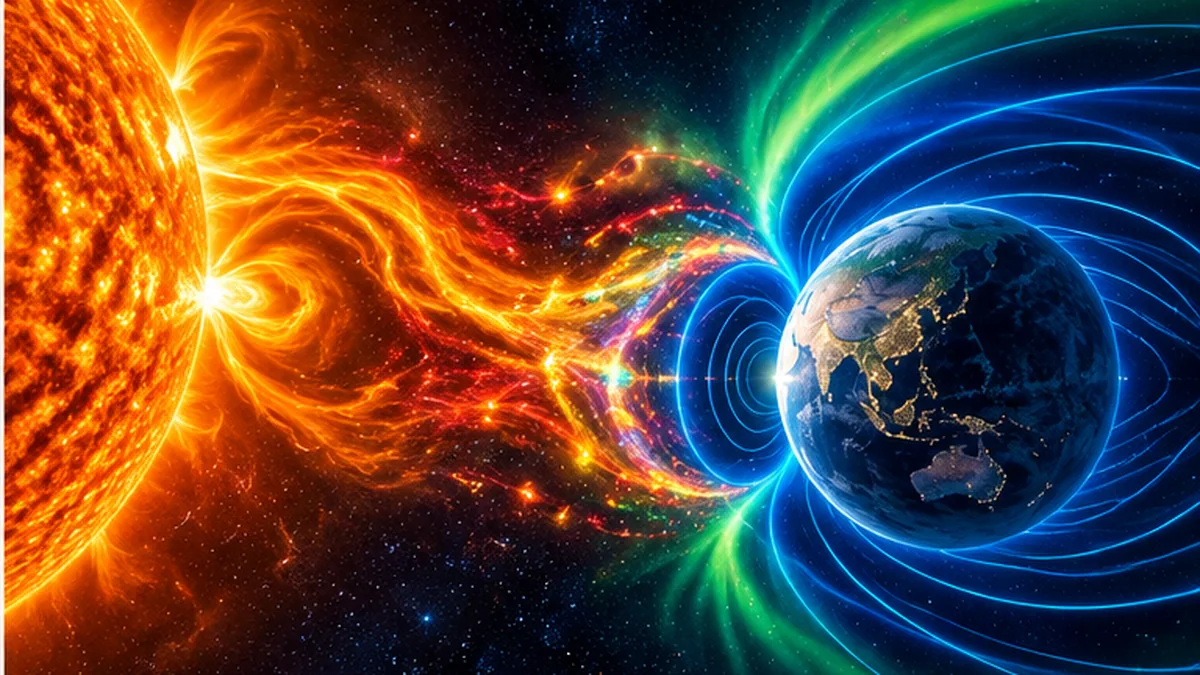
A solar-storm topic has been trending in India around October 11, 2026. The U.S. NOAA Space Weather Prediction Center reported that a coronal mass ejection arrived at Earth on October 10 and issued a G2, or moderate, geomagnetic storm warning for that day, with a watch continuing into October 11. This does not establish that India will experience a nationwide power failure or communications blackout. The scale describes a space-weather risk level, and actual impacts vary by geography, infrastructure and the evolving conditions.
What NOAA actually reported
The October 10 NOAA bulletin said a CME signature appeared in solar-wind observations and described a moderate G2 geomagnetic storm warning until late that day. A G2 watch remained for October 11. The release records measurements and a forecast status, not a confirmed prediction of catastrophic damage in a specific Indian city. Storm conditions may strengthen, weaken or end as instruments receive new data, which is why alert timestamps and current bulletins are essential.
When a headline says a storm “will strike tonight,” compare the quoted forecast with the current NOAA update and note whether the CME has already arrived.
What is a coronal mass ejection?
A coronal mass ejection is a large release of magnetised plasma from the Sun. If its path intersects Earth, the magnetic field carried by the ejection can interact with Earth’s protective magnetosphere. Not every CME is directed toward us, and not every arrival creates the same storm strength. The orientation of the magnetic field and the conditions in the solar wind can strongly influence the outcome after an eruption leaves the Sun.
Images of dramatic solar eruptions are often compelling, but an image alone does not predict when or how severely Earth will be affected.
What the G-scale means
NOAA uses a G1-to-G5 geomagnetic-storm scale, ranging from minor to extreme. G2 is labelled moderate. The categories are designed to communicate possible effects for infrastructure operators and the public; they do not mean every listed consequence happens at every location. A G2 forecast may be associated with some power-system fluctuations, high-latitude radio impacts and changes in the auroral viewing zone, depending on circumstances.
It is misleading to translate moderate into certain disaster or harmless under every possible condition; both exaggeration and dismissal obscure operational risk.
Why GPS accuracy may change
Satellite-navigation signals pass through the upper atmosphere, where space weather can change the electron environment and affect signal timing. The resulting error depends on receiver quality, correction systems, location and storm strength. This does not imply that every mobile map stops functioning during a G2 watch. Aviation, surveying and high-precision users may monitor different parameters than someone using a phone to find a nearby shop.
Check measured disruption reports rather than sharing a blanket claim that all GPS devices are failing.
Power grids and radio communications
Geomagnetic disturbances can induce currents in long conductors and affect some grid components, especially under certain geographical and network conditions. Space weather can also influence high-frequency radio communication and satellite operations. Utilities, aviation providers and satellite operators use specialised monitoring and procedures to reduce risks. The existence of those precautions does not mean an outage has occurred; measured incidents need their own time and location evidence.
For India-specific impacts, consult relevant operators or agencies before treating foreign high-latitude risk descriptions as local observations.
Will people in India see auroras?
Auroras become more likely at lower latitudes during stronger geomagnetic activity, but visibility depends on intensity, local darkness, weather, light pollution and magnetic latitude. A social-media photo labelled India could have been taken in another country or on another date. India-wide visibility claims need careful geographic verification and evidence from observers, not just enthusiasm around a trending hashtag.
The safe claim is that auroral activity can respond to storms. A precise viewing promise requires local forecasts and verified sightings.
How to read space-weather warnings
NOAA issues different products such as watches, warnings and alerts. A watch means conditions are possible within a period, whereas warnings indicate a more immediate or expected threshold under its procedures; alerts can communicate observed activity. A changing bulletin may supersede an earlier one. Readers should look for the product type, validity period, severity, issue time and the linked explanation before drawing a conclusion.
Screenshots cropped to hide a date can turn an expired watch into a misleading claim about tonight.
How misinformation spreads around solar storms
An attention-grabbing image of the Sun combined with an extreme headline can travel quickly, especially when people are worried about mobile phones and electricity. Some posts conflate solar flares, radio blackouts, geomagnetic storms and coronal mass ejections as though they were the same event. Others attach a real NOAA notice to an unsupported prediction about internet shutdowns. The best correction explains exactly which part is real and where the unsupported leap begins.
Do not repeat sensational misinformation in a headline without making the verification result immediately clear to readers.
Where to find the next trustworthy update
NOAA’s Space Weather Prediction Center publishes current forecast and warning products with issue times. For a local outage or radio problem, the relevant utility, operator or civil aviation service is a more direct source than a general space-weather graphic. Scientific coverage should preserve the distinction between a forecast, an observation and a verified impact report. The October 10 bulletin is the source of the G2 description used here.
An honest update may say that a watch expired or that there is no confirmed local disruption. Nothing significant happening is also valuable information.
How a solar warning is issued and revised
Space-weather agencies use instruments observing the Sun, satellites measuring the solar wind and ground-based measurements of Earth's magnetic field. A coronal mass ejection can be detected leaving the Sun before its full impact at Earth becomes clear. Forecasters then estimate the arrival window and likely intensity using the evidence available at the time. A watch means conditions favourable for a particular level of disturbance may occur.
A warning reflects stronger concern based on updated measurements; an observation reports what sensors detected. These products are related but not interchangeable. The G scale describes geomagnetic conditions and ranges from minor to extreme; it does not describe a conventional weather storm moving over one city. An event can change category as new data arrive. For the October 10–11 disturbance, the reader should check the latest NOAA notice instead of treating yesterday's forecast as today's final measurement.
This distinction is especially important when social-media posts reuse an older G2 headline after later G3 reporting has appeared. WNV should timestamp every alert reference, link the issuing agency and explain the difference between a forecast, warning and observed value.
Potential effects on technology are not universal failures
Geomagnetic disturbances can affect infrastructure that depends on Earth's magnetic environment, especially systems operating across large distances or in orbit. Satellites may face changes in conditions around the spacecraft and operators may change procedures when a forecast warrants attention. High-frequency radio can be affected at particular latitudes, while global navigation systems sometimes experience reduced precision when the ionosphere becomes disturbed.
Power-grid risks depend on local geology, latitude, network design and operational readiness; a general space-weather warning does not prove that household electricity will fail. Most people's daily mobile phones and home electronics do not suddenly stop working because a moderate geomagnetic watch is issued. The appropriate public message is measured: operators monitor specific risks and users of sensitive systems may need updated information.
If a viral video claims that all GPS, internet or aircraft navigation will shut down at a precise hour, look for confirmation from the relevant service operator and credible space-weather authorities. Broad technology effects should never be attributed to one solar event without evidence connecting the timing, location and mechanism.
What people can observe and how to avoid false alarms
Aurora visibility is influenced by geomagnetic activity, geographic latitude, darkness, cloud cover and light pollution. Stronger storms can move the visible region farther from the poles, but that does not mean colourful skies will be seen from every location. Viral aurora photographs often lack a verified place or capture date and may include dramatic camera processing. Images can be beautiful without being reliable evidence of a specific event in India.
A trustworthy caption should include the photographer's identity or credited source, location, date and any material editing or illustration label. During a rapidly developing solar event, interested readers can use the NOAA Space Weather Prediction Center's current conditions and forecast products, then compare them with credible local astronomy groups or observatories. They should not confuse forecasts of geomagnetic activity with earthquake predictions, medical emergency claims or other unrelated phenomena.
Sharing a primary link and correcting outdated numbers are more useful than forwarding an alarming poster. WNV's role is to explain the science, show exactly which warning is current and help readers understand why responsible forecasts have uncertainty.
A reader-friendly fact check before sharing the next alert
Check four details before forwarding a dramatic solar-storm graphic: the issuing agency, publication time, alert category and geographical relevance. A screenshot may retain a real agency logo while dropping the date or removing language about uncertainty. A forecast for possible auroras at high latitudes should not be reinterpreted as a promise of sightings across India.
If a post claims that the phenomenon will harm everyone directly, seek a credible explanation of the mechanism and ask whether health authorities have issued any related notice. The most practical source is the agency's latest update rather than a copied image in a group chat. WNV articles will identify which observations are confirmed and which predictions may change. When a more recent bulletin modifies the warning level, the page needs a visible update rather than quietly leaving old information in circulation.
Frequently asked questions
Was a G2 warning issued?
Yes. NOAA reported G2 moderate storming on October 10 and a watch into October 11, 2026. Always check the latest product.
Will all phones lose signal?
A G2 watch does not mean all phone networks will fail. Any actual service interruption needs evidence from operators and monitoring.
What exactly is a CME?
It is a large ejection of magnetised solar material that can interact with Earth’s magnetic environment if directed toward our planet.
Can G2 cause power problems?
Some grid effects are possible under particular conditions, but a forecast does not establish an actual blackout in a named place.
Where are authentic space-weather alerts?
Use the NOAA Space Weather Prediction Center pages with timestamps, not cropped screenshots or forwarded chain messages.
Sources and verification
This WNV explainer draws on the linked reporting and primary information; it does not claim firsthand interviews or event photography. Where accounts are disputed or data are provisional, readers should review the original documents and subsequent updates.