 WORLD NEWS VIEW
Gardner Museum art heist: the FBI evidence behind 13 masterpieces missing since 1990
Two men posing as police stole 13 artworks in Boston in 1990. An evidence-first investigation of the timeline, missing pieces and unresolved questions.
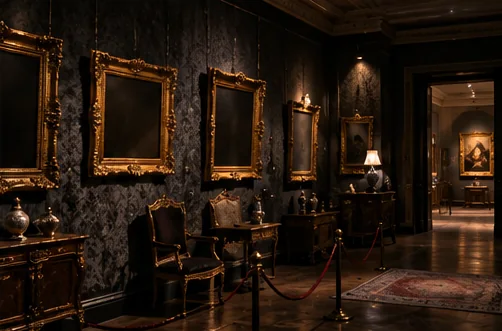
Published 14 October 2026 (IST). Underlying source updates: Historical incident: 18 March 1990; sources checked October 2026.
The empty picture frames at Boston's Isabella Stewart Gardner Museum may be the most arresting evidence of a crime that has outlived generations of investigators. On March 18, 1990, two men posing as police officers entered the museum, restrained two security guards and removed 13 artworks and objects. The FBI calls it the largest property crime in United States history, with the missing works valued at more than $500 million. The museum says its investigation remains active, and the works have not been recovered. Unlike a fictional locked-room mystery, the central facts are documented by the museum and the FBI; the unanswered questions concern who ultimately controlled the stolen objects and where they went.
The night the disguise opened the door
In the early hours of March 18, two men wearing police-style uniforms rang the museum's intercom and claimed they were responding to a disturbance. According to the museum's own reconstruction, the security guard on duty allowed them through an employee entrance despite the rule against doing so. Once inside, the visitors took control of the situation and led the first guard away from his security station. A second guard was also restrained. The costumes and the claimed authority were central to the deception: the museum's protection depended not only on locks and sensors but on a person deciding whether the visitors could be trusted. This aspect of the case remains relevant to physical-security training today.
What happened to the two security guards?
The museum and FBI agree that both guards were overpowered and taken to the basement. They were restrained and unable to stop the theft. The museum's timeline says the thieves departed at about 2:45 a.m. and that police arrived to free the guards at approximately 8:15 a.m. Those timestamps help establish the scale of the intrusion without requiring invented dialogue or cinematic speculation about what the guards were thinking. A common weakness in crime storytelling is treating a victim's silence or an ordinary procedural failure as proof of complicity. The available primary-source timeline establishes that a protocol was broken when the impersonators were admitted; it does not on its own establish that either guard was a criminal collaborator.
The 81-minute window
The FBI says the intruders spent roughly 81 minutes taking the museum's artworks and objects. That long interval distinguishes the case from a quick grab-and-run robbery. The museum reports that motion detectors recorded movement through several galleries, providing another part of the factual record. The thieves moved between different rooms and removed an unusual selection rather than simply collecting what would be easiest to sell. Investigators can study movements and timing, but the public should resist treating gaps in the available record as permission to invent a hidden meeting or a second team. The surprising length of the theft is documented; its complete internal decision-making remains unknown to readers outside the investigation.
Which masterpieces were taken?
The missing works include Johannes Vermeer's The Concert, Rembrandt's Christ in the Storm on the Sea of Galilee and A Lady and Gentleman in Black, several drawings by Edgar Degas and Édouard Manet's Chez Tortoni. The thieves also removed a Chinese bronze gu and a Napoleonic eagle finial. The museum maintains a detailed list and images of the 13 missing objects so that people can recognise them. The collection is historically significant far beyond its dollar valuation. An artwork's meaning can include its rarity, the circumstances of its creation and the place it holds in a collection designed by its founder. Money helps describe the scale of the loss, but it does not replace cultural context.
How the artworks were removed
The museum's published account gives specific details: Rembrandt paintings were cut from their frames, Vermeer's Concert and other works were removed from display, a bronze beaker was taken from a table and smaller objects were collected from separate galleries. The record describes two trips from the museum to the thieves' vehicle. Damage inflicted during removal can threaten an artwork's condition long after the crime itself. It is tempting to recreate precise conversations or the thieves' motives, but those details are not supplied by the museum's chronology. Responsible reporting tells readers what the institution and investigators actually documented and makes clear where reconstruction would cross into fiction.
Why the missing frames remain on the walls
Four years after the burglary, the museum began displaying the empty frames from which some paintings had been taken. The FBI describes that choice as both a reminder of the loss and an expression of hope that the artworks may return. The frames do more than create an eerie atmosphere for visitors. They preserve the sense of placement envisioned by founder Isabella Stewart Gardner, who opened the museum in 1903 and arranged its collection with unusual personal attention. The emptiness is therefore a visible record of damage to a larger artistic composition, not just decoration for a true-crime headline. A sensational photo might win a moment of attention, but understanding why these spaces remain empty gives the story lasting meaning.
What investigators have established publicly
The FBI's Boston Field Office continues to pursue leads in cooperation with the museum and the Massachusetts U.S. Attorney's Office. The bureau's public material says the 13 missing works were separated after the robbery, and their locations could be anywhere. It has asked members of the public to share credible information. That ongoing request is evidence that the investigation is open, not evidence of a recent recovery. Some books and documentaries name suspected individuals, and former investigators have discussed competing explanations. Such theories need independent support before readers treat any named person as proven responsible. The safe factual baseline is that the museum and FBI still seek the stolen pieces.
The reward: what is actually offered?
The FBI's current stolen-artwork notice describes a museum reward of up to $10 million for information leading to the safe return of the stolen artworks in good condition. The museum also mentions a separate $100,000 reward associated with the Napoleonic eagle finial. These terms belong to the museum, not to an independent promise from a news publisher. Readers should consult the institution's current page for exact eligibility, conditions and contact details because reward programmes can change. A headline that reuses the older $5 million figure without checking the current notice would confuse historical reporting with present terms. The essential point is that investigators and the museum continue to seek actionable information, rather than simply celebrate the mystery.
Why selling famous stolen art is difficult
Widely recognised artworks pose unusual problems for thieves. Their images, histories and ownership records are known, so an attempt to sell them openly may draw attention. That does not prove a particular underground route or a named criminal network was responsible; it explains why straightforward resale might be difficult. Some theories suggest artwork can be hidden for years or used as leverage, but the public record does not resolve where these pieces went. Art crime also involves questions beyond market price, including insurance, preservation, provenance and cultural loss. A useful investigation should explain those constraints while refusing to convert a plausible scenario into a settled conclusion. The mystery persists precisely because the available evidence has not yielded a publicly confirmed recovery.
Distinguishing leads, suspects and convictions
True-crime reporting often collapses very different terms into one dramatic narrative. A lead is information investigators may examine; a suspect is someone whose involvement is being considered; a charge is a formal allegation; and a conviction requires the relevant legal process. They are not interchangeable. Public discussion of the Gardner theft has included numerous possible perpetrators, but the FBI and museum's current request for the art does not license an article to accuse someone without evidence. People mentioned in historical reporting may be deceased or unable to challenge claims. Editorial care matters even when a case is decades old. Unless a credible source establishes a person's role to the appropriate evidentiary standard, the story should describe an allegation as an allegation.
Can modern technology solve a 1990 theft?
Modern databases can make it easier to compare known images, ownership histories and reports of suspicious objects. Digital archives also allow researchers to revisit chronologies and published records. But technology cannot authenticate a location merely because an image resembles a missing work. Experts would need provenance information, material examination and coordination with the relevant investigators. Fake tips and doctored photographs could consume resources or distress people connected to the museum. Anyone claiming to have found a stolen Rembrandt should expect independent examination, not instant publication of the claim as fact. Readers should be particularly wary of viral posts that provide a dramatic picture while omitting a verifiable custody history.
What would count as a real breakthrough?
A verified recovery would involve authenticated objects and a statement from the museum or investigators identifying what had been returned. A new lead might be noteworthy but would not, by itself, solve the entire theft. The recovery of one item also would not establish the whereabouts of all 13. Likewise, discovery of a historical photograph or an interview claim could be relevant without proving criminal responsibility. News coverage should state the exact stage of a development and date its claims. This is especially important for an evergreen article, which readers may encounter years after publication. Our account describes the public status visible when this article was prepared; readers should check the museum and FBI pages for later confirmed changes.
Why this is history rather than a ghost story
The Gardner heist has elements that feel fictional: police disguises at night, a pair of restrained guards, a long interval inside a museum and empty frames still hanging decades later. Yet the crime itself needs no supernatural explanation or invented dialogue. The strongest suspense comes from the contrast between a carefully preserved physical environment and the absence of irreplaceable objects. It is possible to tell the story vividly without presenting a reconstructed scene as an eyewitness account. Where we use an AI-generated visual, it is labelled as an illustration rather than original crime-scene evidence. The truth of the case is serious enough, and the people involved deserve reporting grounded in what can actually be checked.
Frequently asked questions
When did the Gardner Museum robbery happen?
The museum and FBI date the theft to the early hours of March 18, 1990, in Boston, Massachusetts.
How many objects were stolen?
Thirteen artworks and objects were taken, including works associated with Vermeer, Rembrandt, Degas and Manet.
Have the missing works been recovered?
The museum's publicly maintained investigation page says the theft remains unsolved and it continues to seek their return.
How long were the thieves inside?
The FBI describes an approximately 81-minute interval during which the intruders removed the objects.
Why are there empty frames in the museum?
The institution deliberately retained the empty spaces as a reminder of the loss and hope for the works' return.
Is there a reward for information?
The FBI describes a museum reward of up to $10 million, subject to the museum's terms; always check its current listing.
Can an online theory identify the culprits?
No. A convincing theory is not proof. Criminal responsibility requires corroborated evidence and fair treatment of allegations.
Sources and reporting notes
These links document the underlying event and publicly available statements; interpretations and practical context are WNV analysis.
More WNV coverage
Sources and verification
Read the original sources to examine the evidence and publication dates.
Related coverage
 AI illustration
Dyatlov Pass explained: nine deaths, mountain evidence and the avalanche research
What is documented about the 1959 Dyatlov Pass tragedy, how snow-slab avalanche research works and why unanswered questions remain.
 AI illustration
Antarctic sea ice at third-lowest winter maximum: NASA’s 2026 numbers explained
NASA’s October 12 data show Antarctic winter sea-ice extent peaked at about 17.59 million km² in September 2026. What it means and what it does not.
 AI illustration
India’s September inflation reaches 5.54%: food prices and RBI outlook explained
The September 2026 retail inflation rate of 5.54% and food inflation of 7.74% raise questions about household costs and the RBI’s future rate decisions.